
Introduction
There’s something about the first rain of the season that takes you straight back to childhood. The smell of wet earth, the sound of drops on a tin roof, muddy puddles and zero consequences. Back then, the rain wasn’t a problem to solve — it was an invitation. You ran into it.
You still want to. That part hasn’t changed.
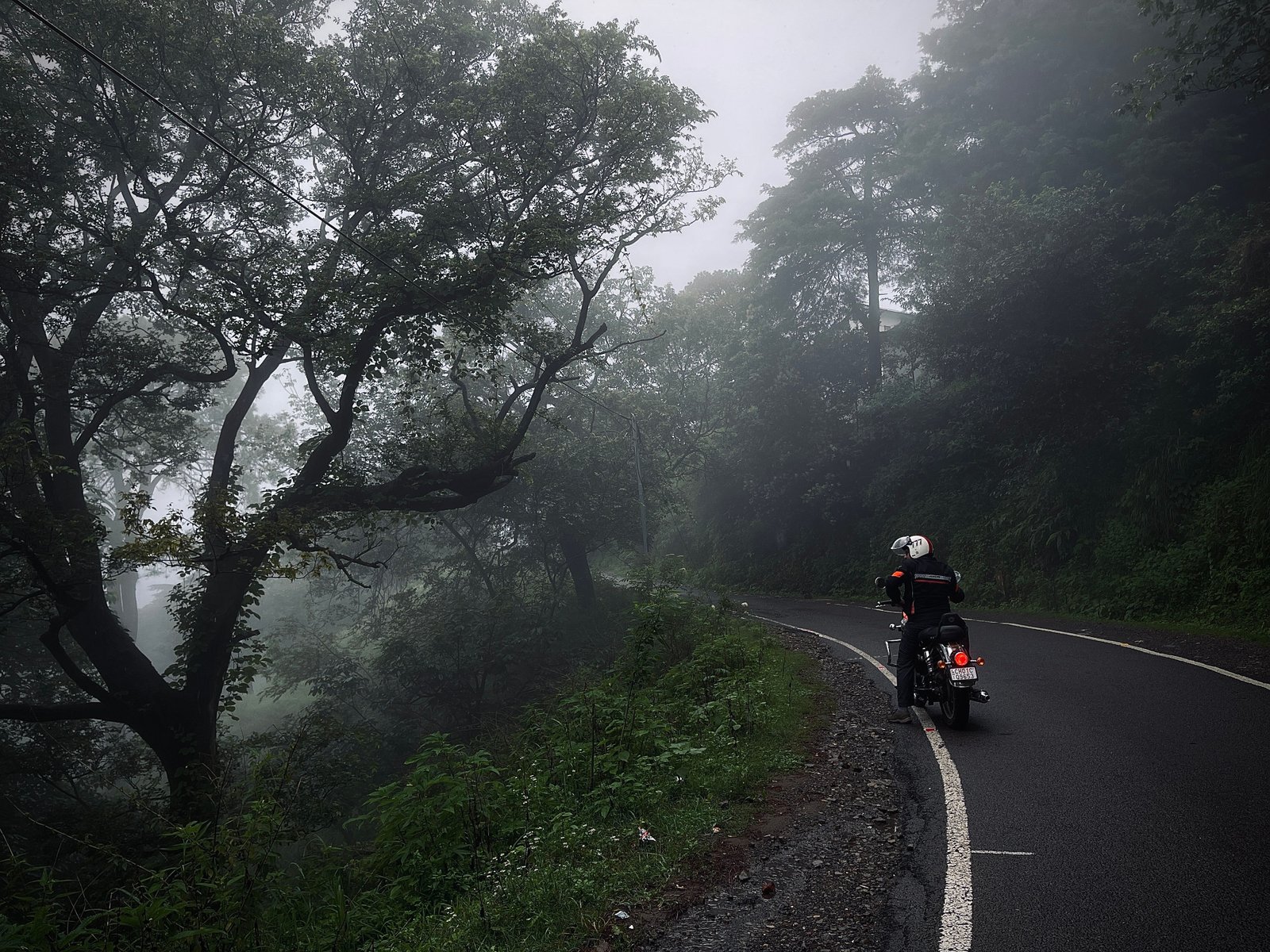
But today, you may be doing it on a motorcycle. And that changes everything — not the joy of it, but the preparation behind it. Monsoon riding has its own magic: the cool air, the empty roads, the mist sitting low on the hills. Done right, it’s some of the best riding you’ll ever do. Done carelessly, it’s one of the most dangerous.
What Makes Monsoon Riding Different
The rain doesn’t just make you wet. It changes the entire equation on the road. Here’s what you’re actually dealing with:
- Hidden potholes — waterlogged roads hide potholes that are clearly visible on dry tarmac. You won’t see it until you’re already in it.
- Oil spills — truck and bus oil that sits harmlessly on a dry road — float to the surface the moment rain hits, dramatically reducing your tyre’s grip.
- Reduced visibility — we’re already small and hard to spot on a motorcycle; rain makes it significantly worse for every vehicle on the road, in both directions.
These aren’t reasons to park the bike. They’re reasons to prepare properly.
Your Pre-Monsoon Bike Checklist: Four Things to Inspect Before the Rains Hit
Do this before the season begins — not after your first wet ride.
Tyres — Your Only Contact with the Road
Check your tyre tread depth against the wear indicators on the tyre sidewall. If the tread has reached or gone beyond that marker, replace immediately — before the monsoon hits, not after. Worn tyres on a wet road don’t reduce grip. They eliminate it.
Brakes — Your Last Line of Defence
Check your brake pads for wear. If the wear indicator is signalling replacement, do it before the season begins. Wet roads already extend your braking distance — degraded pads make it worse. Short inspection, long impact on your safety.
Chain — 500km Rule, No Exceptions
Monsoon accelerates chain wear — water, grit, and mud are hard on it. Clean with a chain cleaner and lubricate every 500km, or per your manufacturer’s recommendation. A neglected chain in monsoon means a noisy, stretched, or snapped chain on a wet road far from home.
Bike Cover — Small Habit, Long-Term Protection
Use a proper bike cover when parking during monsoon. Water in the wiring harness or fuel tank area creates problems that show up gradually and expensively. A cover is cheap insurance against that.
Riding Gear: Protecting Yourself in the Rain
Bike maintenance keeps your motorcycle reliable. Riding gear keeps you in one piece.
Helmet — Start with Your Visor
Inspect your visor for scratches before the rains begin. Scratched visors scatter oncoming headlights and streetlamps into glare that compromises your vision at exactly the wrong moment. If it’s scratched, replace it — it’s the cheapest part of a helmet to swap out.
The Fog Problem — and the Pinlock Solution
When warm breath meets a cold visor, condensation builds on the inside instantly — and your visibility disappears with it. The fix is a Pinlock insert, an anti-fog film that installs inside a Pinlock-ready visor. It’s inexpensive, easy to fit, and transforms your visibility in rain. If your helmet is Pinlock-ready, this is a non-negotiable pre-monsoon purchase. If it isn’t, consider upgrading before next season.
Rain Suit — Keep the Water Out
Soaked clothing gets heavy and cold, restricting movement. A rain suit worn over your riding gear solves this. Royal Enfield, Rynox, and Viaterra all make purpose-built rider rain suits with sealed seams that pack small enough to carry at all times. Keep one in your bag for the entire monsoon season.
Waterproof Gloves — Your Hands on the Controls
Wet hands lose sensitivity and grip — exactly when your throttle, brake, and clutch inputs matter most. Get a dedicated pair of waterproof riding gloves. Rynox, Viaterra, and Royal Enfield all have options. Treat these as season-specific kit, separate from your regular riding gloves.
Waterproof Boots — Grip from the Ground Up
Wet feet get cold fast and affect how confidently you plant your foot at a stop. Royal Enfield and Hanleh carry waterproof riding boots with proper ankle protection. If you’re riding through monsoon seriously, this is worth the investment.
On the Road: How to Actually Ride in the Rain
These six points separate riders who handle monsoon confidently from those who shouldn’t be out in it.
1. Understand Aquaplaning — and How to Avoid It. At speed, your tyre can stop contacting the road and start riding on top of a water film instead — at that point, braking and steering both stop working. The fix has to happen before you enter the water. As soon as you see standing water ahead, reduce speed progressively and pass through slowly. Never enter a waterlogged stretch at speed.
2. Be Visible — Headlights On, Always. In rain, even daytime visibility drops significantly. Every time you ride in rain — even drizzle, even at noon — switch your headlight on. Use auxiliary lights if your bike has them. You can’t control whether others ride carefully. You can control whether they see you coming.
3. Caught in Unexpected Rain — Know When to Stop. If the rain is light, continue with extra caution. If it’s heavy — reduced visibility, waterlogged roads, traffic struggling to see — stop immediately and find shelter. A dhaba, petrol station, shop front — anything with a roof. Do not shelter under trees during a storm. No ride is worth riding blind.
4. Braking Technique in the Wet: Anticipate situations early — your reaction window is shorter and stopping distance is longer in rain. Always use front and rear brakes together, progressively — squeeze, don’t grab. Never brake suddenly. And critically: only brake on a straight line. Mid-corner, ease off the throttle gently instead. Braking while leaned over in the wet is how crashes happen.
5. Following Distance — Double It. Stopping distance in wet conditions is significantly longer for every vehicle on the road. Whatever gap you normally maintain, increase it meaningfully. Give yourself room to react, brake progressively, and still stop safely.
6. Puddle Discipline — Assume the Worst: Every puddle on an Indian road during monsoon is a pothole you can’t see. Slow down before you reach it, pass through steadily, don’t brake while you’re in it. Treat every patch of standing water as a threat until you’re clear of it.
Conclusion
Monsoon isn’t the enemy of riding. Unpreparedness is. A well-maintained bike, the right gear, and a calibrated approach on the road will get you through the wettest months with some of your most memorable rides.
That’s what we build at Highland Moto Adventure — riders who aren’t stopped by conditions, because they prepared for them. Enjoy the rain. Feel the mist. Remember what it felt like to be a kid running out into a downpour with zero hesitation.
Just wear your gear first.
Happy Monsoon Riding. Stay safe, stay prepared — and keep the rubber side down.
Questions about monsoon gear or bike prep? Drop them in the comments below.
Frequently Asked Questions
- Is it safe to ride a motorcycle in monsoon? Yes, with the right preparation. A well-maintained bike, appropriate rain gear, and a smooth riding style make monsoon riding safe and enjoyable. The risk comes from riding unprepared — worn tyres, degraded brakes, no rain gear, and aggressive inputs in wet conditions.
- What is aquaplaning and how do I avoid it on a motorcycle? Aquaplaning happens when your tyre rides on top of a water film instead of the road surface — braking and steering become ineffective. Reduce speed before entering any waterlogged section, not after. Never enter standing water at speed.
- Should I brake differently in the rain? Yes. Use front and rear brakes together, apply progressively, and anticipate early so you’re never braking suddenly. Only brake on a straight line — mid-corner, ease off the throttle instead.
- What is a Pinlock insert and do I need one? A Pinlock insert is an anti-fog film that installs inside a compatible helmet visor, preventing condensation from forming on the inner surface. If your helmet is Pinlock-ready, buy one before monsoon season. It’s inexpensive and makes a significant difference to visibility in rain.
- How often should I lubricate my chain during monsoon? Every 500km is widely recommended, though check your manufacturer’s guidelines. Monsoon accelerates chain wear, so clean and lubricate more frequently during this season.
- Do I need separate gloves for monsoon riding? Yes. Regular leather or mesh gloves are not waterproof. Wet hands lose grip and sensitivity, directly affecting throttle, brake, and clutch control. Waterproof riding gloves are a monsoon essential.
- What should I look for in a monsoon rain suit? Sealed or taped seams, a fit that goes over your existing gear, and a design that packs compactly. Rynox, Viaterra, and Royal Enfield all offer purpose-built options.