

Introduction
There was a time when a motorcycle in India wasn’t a hobby — it was our main mode of transport, apart from public transport. No car money, no car. We rode purely to get from point A to point B, because it was the cheaper way to travel. That’s changed. A lot of that shift traces back to Siddharth Lal — now Executive Chairman of Eicher Motors — who took over Royal Enfield as a struggling brand and rebuilt it around what riders actually feel on the road. He’s a rider himself, and it shows in the products. That shift kicked off a culture change every other manufacturer has had to chase. Bajaj, Hero, KTM — everyone’s fighting for a slice of the ADV pie now, ever since the Himalayan 411 proved that Indians don’t just want to get from A to B on two wheels. They want the wind, the cold, the climb, the nod of respect from another rider passing the other way. We’re not just commuters anymore — we’re travellers on two wheels (you’ve seen this on rides like our Bodh Gaya run — it’s never just about the destination).
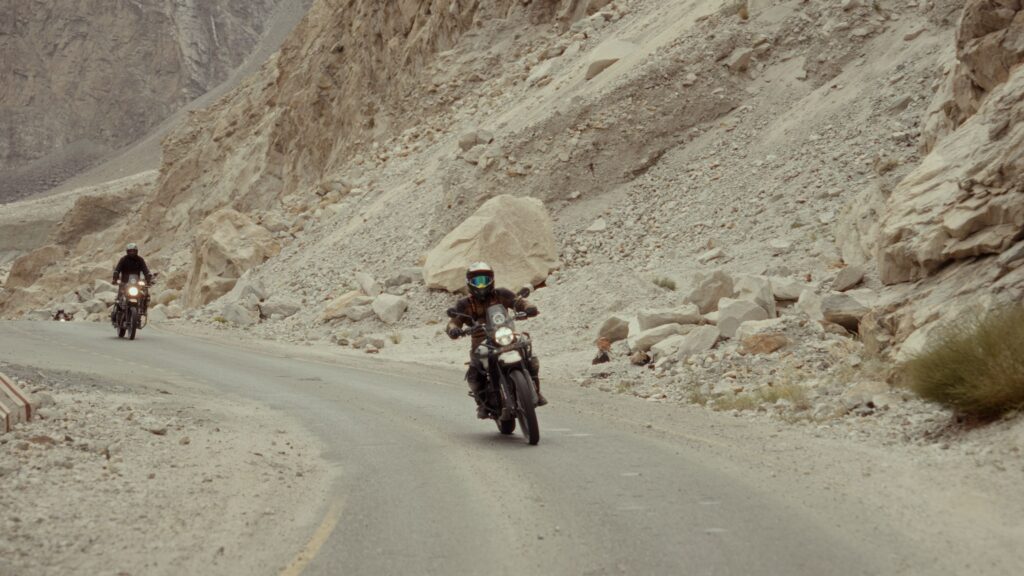
But here’s the uncomfortable truth nobody puts on the brochure: a motorcycle is the most unsafe vehicle on an Indian road. We’re small, and we’re not visible to the big vehicles on the road — that’s the real danger, not just poor road conditions. Blind corners, stray cattle, sudden potholes, distracted drivers who genuinely don’t register a bike in their mirror — this is the terrain we choose to ride into, every single time, for the love of it.
And yet most riders who’ll spend ₹10 lakh on a motorcycle will buy a ₹2,000 helmet. The logic breaks down fast: a ₹2,000 helmet is fine for a 20-30 kmph city crawl. It is nowhere close to enough at 80-100 kmph, which is exactly where most of us ride while touring long distance. The same gap exists in gloves, jackets, pants, boots — the gear meant to stand between your body and the tarmac.
Why Gloves Deserve Their Own Conversation
This piece is about gloves specifically — because hand and wrist injuries are among the most common injuries riders suffer in a fall, right alongside head trauma. Instinct takes over the second you go down: your hands shoot forward first. Ground contact, first point. So let’s talk about how to actually choose a pair that does its job.
Mesh vs. Leather: Comfort, Climate, and Compromise
Gloves generally come in two constructions — fabric/mesh and leather.
Mesh gloves have small perforations that let air through, making them the better choice for summer and city riding — your hands breathe, your grip stays comfortable on long, hot stretches. Leather gloves, by contrast, run warmer; airflow is minimal, which makes them less comfortable in peak summer but significantly better suited to winter rides where retaining heat actually works in your favour.
Where leather pulls ahead, though, is abrasion resistance. Leather simply holds up better against a slide on asphalt than fabric does. So the real decision isn’t “which is better” — it’s “what am I optimizing for, comfort or protection, and in what season.”
What Actually Protects You: Breaking Down Glove Anatomy
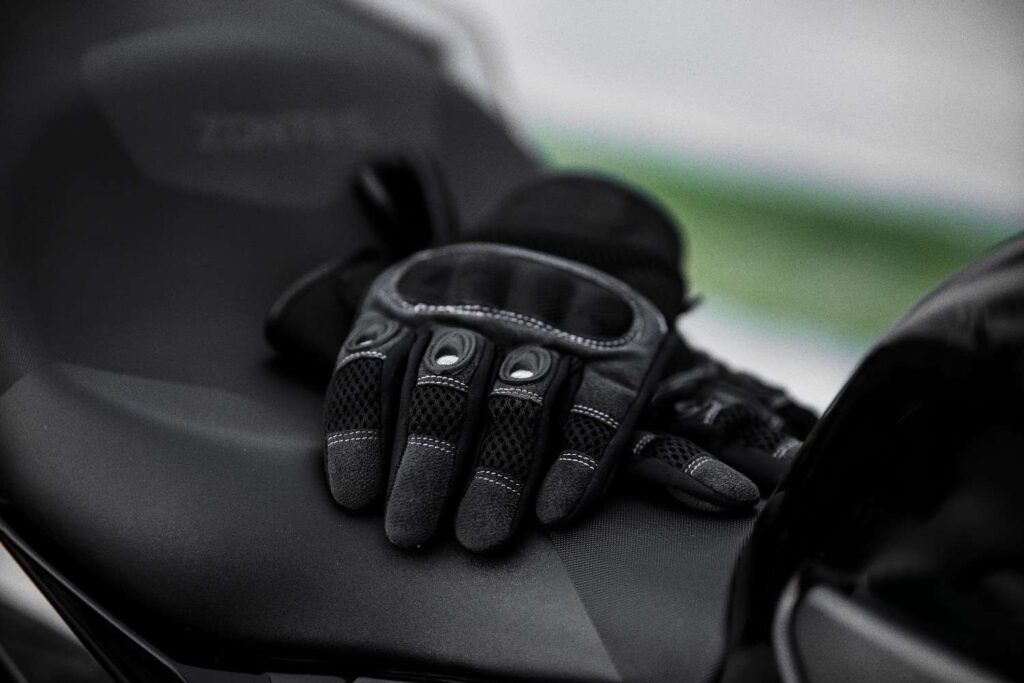
Strip away the branding and every serious riding glove is solving for three impact zones.
1. The Palm — Scuff and Slide Protection When you go down, your palm hits first and drags. Manufacturers handle this two ways:
- Padded foam / multi-layer leather patches near the heel of the palm — adequate for slower city riding where you’re unlikely to hit the ground at speed.
- Palm sliders — hard, low-friction inserts built for touring and highway speeds. Their entire job is to let your hand slide on impact instead of catching and twisting. That slide is what saves your wrist from snapping or fracturing on impact. No slider, more friction, more torque on the wrist bone — that’s the real danger.
2. The Knuckles — Impact Protection Knuckle guards come in TPU (Thermoplastic Polyurethane) or TPR (Thermoplastic Rubber) hard armor for serious touring, or simpler padded foam for city use. Either way, this is what stands between your knuckles and a direct hit on the ground or a stationary object.
3. The Fingers — Edge Protection Often overlooked, but your little finger sits exposed on the outside edge of your hand — the first point of contact in a lot of low-speed tip-overs. Good gloves carry extra side padding here specifically for that reason.
So… What Should You Actually Buy?
Here’s the practical takeaway, no fluff:
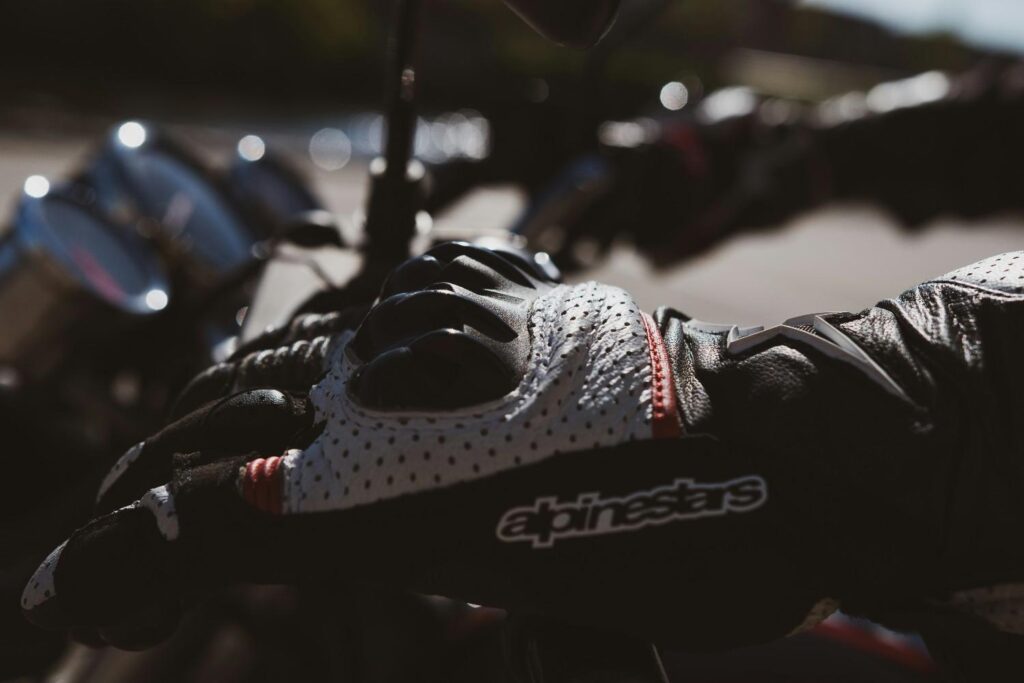
If budget allows: Go full gauntlet — gloves that extend protection up and over the wrist bone itself. This is the single biggest upgrade in real-world protection.
If you’re strictly riding in the city:
- Mesh fabric construction for breathability
- Padded palm protection (sliders not essential at city speeds)
- TPU/TPR knuckle protection
If you’re touring, doing interstate or long highway rides:
- Leather construction (preferably full gauntlet)
- Palm sliders — non-negotiable at touring speed
- TPU/TPR knuckle protection
- Reinforced finger padding
Don’t skip the certification label. Look for CE (Conformité Européenne) certification on the gloves you’re buying — it’s the closest thing to an independent safety rating in this category. CE Level 1 means the glove meets baseline impact and abrasion standards; CE Level 2 means it’s been tested to a higher threshold of impact absorption, typically on the knuckles and palm. A glove with no CE rating at all hasn’t been independently tested for impact protection — which means you’re trusting the brand’s word alone.
For city riding, CE Level 1 is generally adequate. For touring and highway speeds, look for CE Level 2 wherever your budget allows.
One more thing — riding gloves for rain and riding gloves for winter are not interchangeable with your everyday pair. Different conditions, different jobs. Build a small collection if you’re riding seriously across seasons.
Brands Worth Your Research
A word of caution first: skip the generic no-name gloves flooding Amazon. No R&D, no real construction quality, no point. If a brand looks promising, actually dig in — check their material sourcing, build quality, and rider reviews before you commit.
Brands genuinely worth a look:
- Royal Enfield — Their glove line-up spans beginner, summer mesh, and full leather touring gloves, with rubber knuckle padding and palm protection scaled appropriately across the range, up to full-leather perforated touring gloves with sliders and TPU knuckle guards.
- Viaterra — Particularly the Holeshot and Holeshot Pro, both well-regarded for their Knox SPS palm sliders and CE-certified knuckle protection.
- Rynox — Their Air GT and Air GT SP lines are well-regarded for all-round protection and ventilation.
- Raida, Scala — and a handful of other brands building well-researched gear for specific use cases.
Visit their sites, try the gloves on if you can, read real rider feedback — don’t just default to whatever shows up first in a search.
Conclusion
Your bike is replaceable. Your hands aren’t. A crash totals a motorcycle and insurance handles the rest — there’s no insurance claim that gives you back full motor function in your fingers. The extra few thousand rupees spent on the right gloves is the cheapest insurance you’ll ever buy.
That’s the whole point of what we do at Highland Moto Adventure — we don’t just chase the ride, we teach you to be prepared beforehand. Choose your bike with excitement. Choose your gear with the same seriousness. If you want to see how we build this thinking into our actual rides, check out our ride chronicles for a look at what proper preparation looks like on the ground.
For more on glove safety standards, the CE certification benchmarks (Level 1 vs Level 2) are worth a quick read before you buy.
Ride smart. Ride protected. We’ll see you on the road.
Got questions about specific gloves or gear for your riding style? Drop them in the comments — happy to help you figure out what’s right for your setup.
Frequently Asked Questions
Are leather or mesh riding gloves better? It depends on what you’re optimizing for. Mesh gloves are more breathable and better for summer or city riding. Leather gloves offer better abrasion resistance and are the safer choice for touring, highway speeds, or winter rides.
What is CE Level 1 vs Level 2 protection in riding gloves? CE (Conformité Européenne) certification rates impact protection for knuckle and palm armor. Level 1 offers basic certified protection; Level 2 offers a higher tier of impact absorption, generally recommended for touring and highway riding.
Do I need palm sliders on my riding gloves? If you’re riding mostly in the city at low speeds, padded palm protection is usually enough. For touring or highway riding, palm sliders are strongly recommended — they let your hand slide on impact instead of catching, which protects your wrist from twisting injuries.
What’s the difference between TPU and TPR knuckle protection? TPU (Thermoplastic Polyurethane) and TPR (Thermoplastic Rubber) are both hard armor materials used for knuckle protection. Both are common in serious touring gloves and offer solid impact resistance compared to simple padded foam.
Are full gauntlet gloves necessary? Full gauntlet gloves extend protection over the wrist bone, which is one of the most common injury points in a fall. If your budget allows, they’re worth the upgrade — especially for touring and long rides.






2 comments
Very informative,I think every rider should read this and implement in their day to day riding habit.
Thanks a lot highland moto for this crutial initiative to
Acknowledge us with such deep and important analysis for us
Thanks for the comment. Do read our other blogs, and comment.